Social Media Analytics Tools
Social media analytics is the practice of gathering data from social media websites, blogs such as Twitter, Facebook, Digg etc., and analyzing that data to make business decisions, ideas or solutions. Social media analytics are mostly used to support marketing or customer service activities, but this depends upon your type of business and your goal.
The first goal is to determine what are you trying to analyze and what is your end goal. For instance, some companies use analytics to find better ways to engage with customers, to reduce customer service costs, to determine the return on investment, feedback, or amending the public opinion of a particular product or service.
Once you identify your end goal, key performance indicators (KPIs) for objectively assessing the data should be placed. For example, on Twitter customer engagement might be measured by the number of followers, retweets, mentions or clicks on a link.
There are so many social media analytics tools that measure performance. Below are different social media analytics tools.

Works with all major social media channels
Facebook, Twitter, Vine, Instagram, YouTube, Google+, Klout, and Google Analytics; Tumblr, Pinterest, and LinkedIn is coming soon. With Simply Measured, analysis doesn’t stop with one profile. Measure the cohesive relationship between each network, your competitors’ social profiles, and how your audience interacts throughout the entire social space.
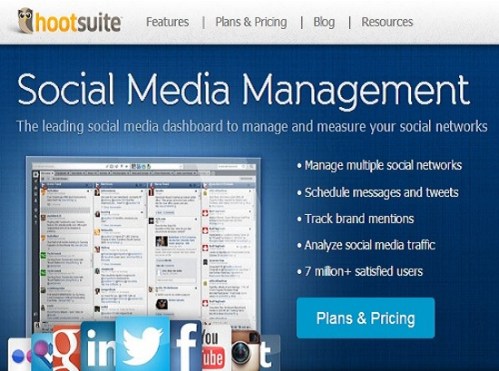
Hootsuite is one of those multi-function social media tools.
The leading social media dashboard to manage and measure your social networks. You can manage multiple social networks, schedule messages and tweets. Track brand mentions. Analyze social media traffic. 7 million+ satisfied users. You can post updates on a wide range of social media accounts: Twitter, Facebook, LinkedIn, Google+, YouTube. Tumblr, WordPress.
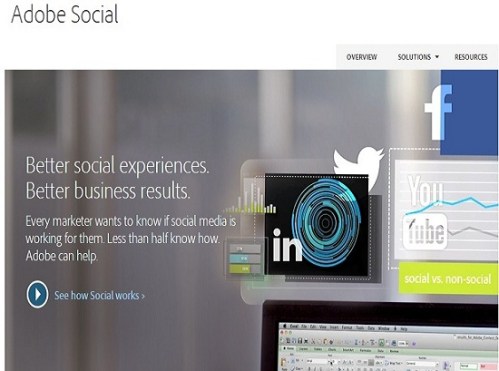
Social marketing is all about relationships. With the new Adobe® Social, marketers finally have a comprehensive solution to build stronger connections through the content that’s guided by tangible data. Create the most relevant posts, monitor and respond to conversations, measure results, and connect social activities to business results.
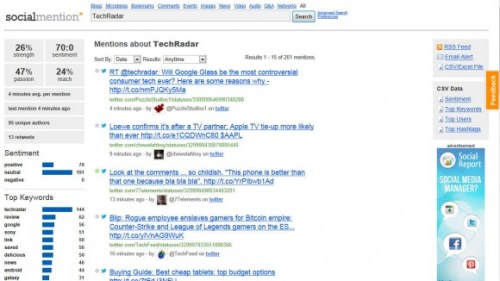
Social Mention is a social media search engine that searches user-generated content such as blogs, comments, bookmarks, events, news, videos, and microblogging services. It allows you to easily track what people are saying about you, your company, a new product, or any topic across the web’s social media landscape in real time.
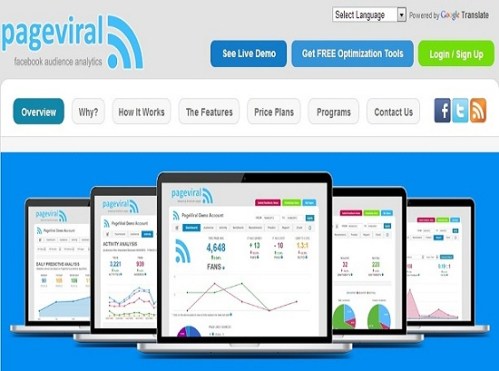
PageViral tracks real-time user behavior, sentiment, engagement and interaction patterns in 41 different languages. PageViral is one of the very few multilingual social media analytics platform in the industry. Multi-Lingual support is a subset of our natural language processing technology, which analyzes audience interactions in their own native language. You get to identify key influencers and understand your audience better, including how they feel towards your brand, how they engage, their active time intervals, etc.
Conclusion
In social media, it is important to determine if you’re reaching the right audience and connecting with them. Regular reports and metrics enables you to figure out the best solution and gain insights for your company or brand.
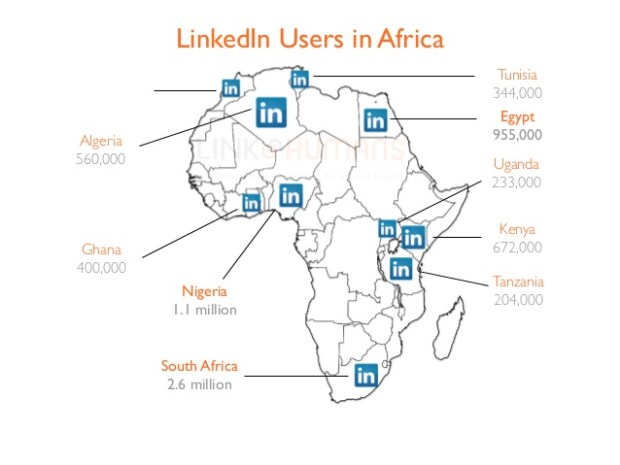
Infographic: Over 7.5 million Africans on LinkedIn; South Africa, Nigeria and Egypt account for over 60% of users
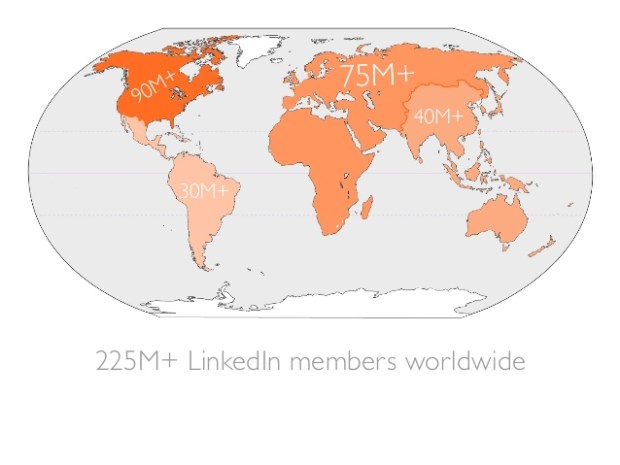
Africa is the world’s second largest and second most populous continent, after Asia. Social media in general is taking Africa by storm . Over 7.5 million Africans use LinkedIn, over 20% are entry-level, and the majority of the users are ages 18-34, most of them are male. LinkedIn is quickly gaining popularity among working class professionals in Africa though it is still far less popular compare to Facebook and Twitter. Other countries with the fastest growing number of users include Kenya, Ghana, Uganda, Tanzania, Zimbabwe, Algeria, Morocco, and Cameroon as seen in the images below.

Social Media Marketing Strategy
 Social media marketing refers to the process of gaining traffic or attention through social media sites. Social media can also be viewed as a monitoring tool, widely used to inform customer service, product development and marketing activities.
Social media marketing uses technology to build relationships, drive repeat business and attract new customers through friends sharing with friends. Social media marketing not only increases branding and website traffic, it is a powerful influence in overall search engine optimization.
Social media marketing can help you increase the activity around these top goals:
- Website traffic and user behavior (external and internal tracking)
- Conversion and sales tracking
- Page views, ad exposure
- Raising brand awareness
- Creating a positive brand association and keeping it there
- Broader customer reach
 When shifting gears from traditional marketing to social media, it is important for a company to prepare a scheme. The strategy begins with a focus, which include goals. And those goals can include short and long-term goals. When you think about social media, it is important to remember to set realistic business goals. For example: Are you going to generate leads, answer complaints, engage with customers, or something else? Will you be doing all the above? How will this relate to other functions and tools, like the rest of the marketing plan or the rest of customer service? Try to stay focused and be specific.
Social Media Marketing Strategy (Influence and ROI)
Social media can be used for different goals. For example, Oprah’s opinion on literature has inspired millions to choose titles from her book club. But you don’t have to be Oprah to have influence. You influence your friend when she listens to a song you recommend on Facebook. You influence your coworker when he checks an article you posted on LinkedIn and shares it with someone else. Social actions like these are reflections of influence.
As a company you can influence one customer to another. For example, a loyal customer can act upon others by a simple tweet, feedback or an RT (retweet) that mentions the brand. It is important for organizations to focus on cultivating the engagement and not figures.
Define your target audience and find specific areas of expertise. Don’t try to cater to everyone. Alternatively, if you are really keen to progress to power users, key decision makers and influencers, your content should be designed around your market. Social media is simple and yet complicated.
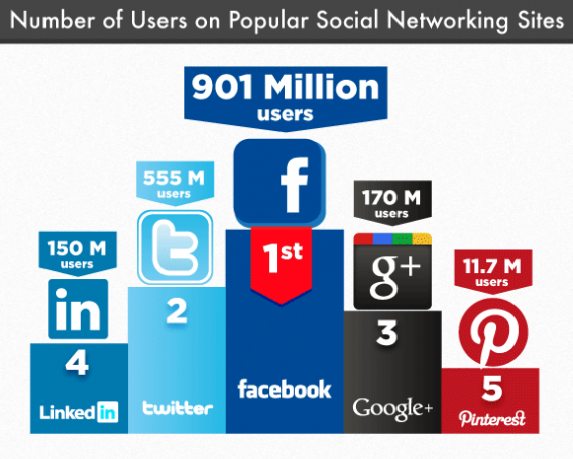
It’s complicated because you have to know your audience so well that you know exactly what social media platforms they use regularly. Is it Facebook? Twitter? YouTube? LinkedIn? The focus should be which social network is generating more audience and engagement, see the example:
 ROI = (Gain from the Investment – Cost of Investment) /Cost of the Investment
Marketing VS. ROI
Social media marketing should never be done as a stand-alone campaign, and it should always support your other marketing initiatives. Social media is not an activity that can exist on its own. For social media to be beneficial, it is important to co-exist alongside other activities such as offline marketing, digital marketing, public relations, and advertising.
Social Media Strategy (ROI and Audience)
Social Media Marketing is not necessarily a direct sales tool, but is effective at engaging your audience, conversations, expand web presence, build brand awareness, generate expose and provides SEO (Search Engine Optimization) benefits.
Some marketers say social media has no ROI but is great for:
- Brand building
- Relationship management
- Product development
- Reputation management
- Customer interaction
- Customer feedback
- Customer support
- Community building
Jeffrey Hayzlett, former Kodak CMO said: “Social media is not a campaign. It is a commitment.” Meaning a social media plan should cover your immediate and short-term while keeping an eye to the fact that technology changes all the time, if not daily. Don’t be surprised that some of the tools you chose are outdated by the time you get around accessing them. Flexibility is the key to success in business today.

One of the most frequent questions is that how do you measure ROI on social media? It is possible, but it’s not black and white. The same question could be asked about how can you measure ROI on organizational emails. The absence of social media, a striking example: an email in your organization would lead to an implicit cost of being in business. You can get greater profits using social media marketing that can help cut expenses and increase revenue.
For example: more traffic equals more profit.

Social Media Strategist (Return On Investment)
Measuring Social media ROI is like asking a sales person what is the ROI of a phone call. They only way to discover the answer is by tracking a volume of phone calls and looking at the conversion rate, understanding those converted and those who replicated the effort. It can be applied to customer service as well, what’s the ROI for great customer service? We know companies that have great customer service tend to be more profitable than those without it, but is it a truly quantifiable return on dollars spent?
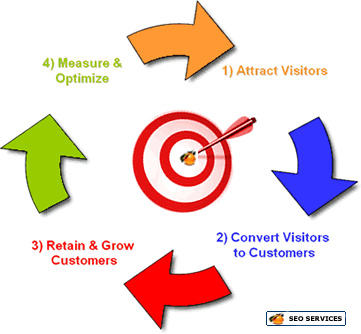 The Return On Investment in social media can be measured by looking at:
- Mentions — people are talking about your business and your product.
- Traffic — track the number of people who visit your site or blog, Fan your Facebook page, or follow you on Twitter.
- Positive feedback — look at what people are “saying” about your product. Engage with your customers through social media.
- Tracking promotional codes — How many people are clicking on a link? You can track clicks on specific urls by using url shortener: bit. ly.
- Other sites like Google Analytics, Spring Metrics, Facebook Insights, Tweetreach
Solution:
A company can measure their ROI from social media by tracking which posts and tweets are driving traffic to the site, converting these trends to sales number.
It is important to keep in mind; social media is about sharing and connecting, creating a meaningful conversation around relevant content and encourage feedback.
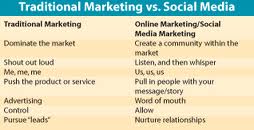
There is a difference between traditional marketing and social media marketing. In traditional marketing, you throw out a message to millions of people who couldn’t care less. In social media marketing, you find the people who are already talking about your message and join the conversation.
Without a well thought social media strategy, is worse than neglecting social media altogether.


 The Marketing Explorer