Why Real-Time Marketing is Real
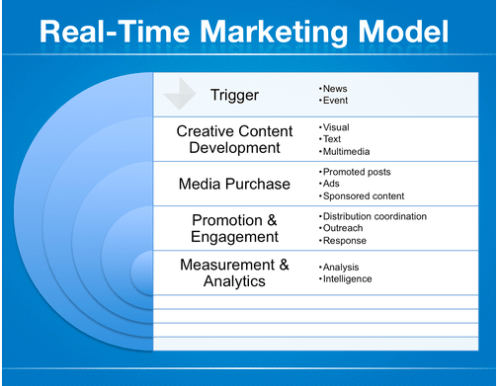
Real-time marketing refers to the speed in which the content hits the market.
Brands can use real-time marketing to monitor their digital environment, respond in real-time, build a relationship, increase and promote participation. Marketers are still trying to figure out how to master this strategy. Real-time marketing requires originality.
It takes grit and creativity for brands to successfully implement real-time marketing into their marketing tactics. It takes creativity to make a clever tweet but it brings a whole new level of creativity for brands to create mini-campaigns to leverage breaking news about their brands in a timely manner.
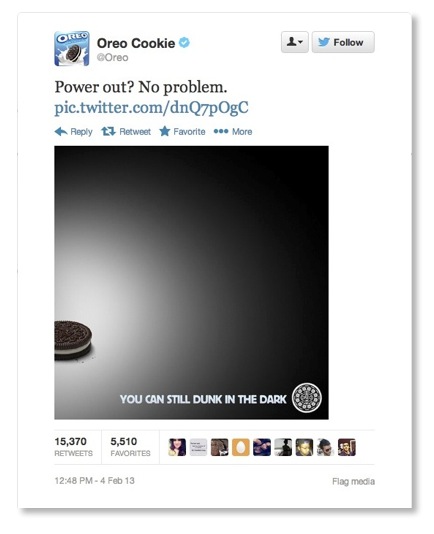
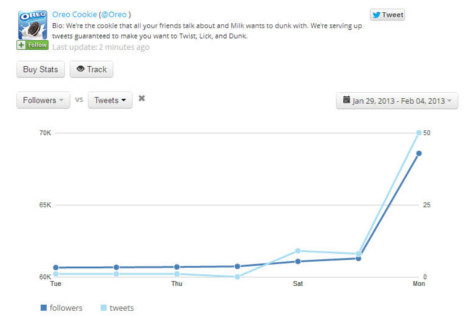
Oreo, a popular cookie brand, is one brand that introduced and dominated the concept of real-time marketing in the digital world. Oreo cookie released a simple special tweet/image that capitalized on an expected power outage second of half of the Super Bowl in February. Oreo cookie took two minutes after power failure to come up with this concept, the image led to a massive brand awareness boost to the brand. The image was retweeted more than 15,000 times, accrued 19,610 Facebook likes within the first hour.
Oreo’s marketing campaigns always spoke to the target audience. Oreo’s marketing team is definitely taking the digital world by storm; in the 2011 Guinness Book of World Records awarded them with the record of most “likes” on a Facebook post within 24 hours. Today, they have doubled their Facebook likes from 16 million to 32 million. Oreo cookie has one of the most creative and successful real-time marketing campaigns.
Janda Lukin, Brand Director said, “we will continue to look for ways to grow and expand in [the digital] area – always keeping the filter of looking at the world through the eyes of Oreo.
Oreo’s real-time digital marketing efforts have thus far paid off. By observing Oreo’s cookie marketing tactics, one can begin to understand what real-time marketing is and how it can be used with a good humor. Oreo 101-year old cookie has the best digital marketing campaign to date, and they have set a whole new standard for marketing in the digital age.
Color in Branding
We all encounter color in our everyday lives, from traffic lights to the products we buy. Color certainly influences what we read and what we buy. Have you ever thought about the importance of color in branding?
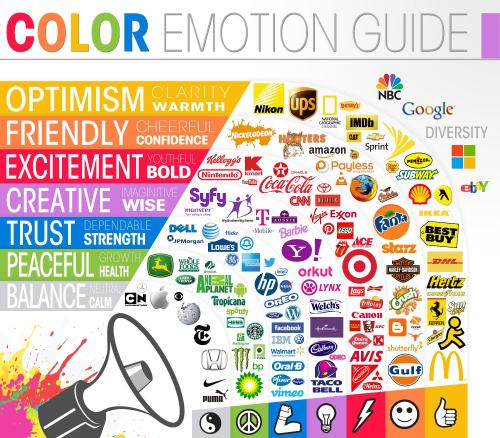
The proper use of color in branding is vital, and it plays an integral part in memory recall. Color stimulates all the senses, instantly conveying a message like no other communication method. Color conveys meaning and message without words and it should represent your brand’s image.
Choosing the correct color for your brand is crucial, the colors you use in your branding efforts should be carefully weighed because it sets you apart from your competitors’ products and logo. Each color triggers certain emotional and psychological reactions.
You want your brand perceived in a way that is rememberable to your customers, some brands are instantly recognizable by their colors. For example, McDonald’s use their brand color “yellow” to great effect. Yellow is the most visible color, which is why the McDonald’s M can be seen from a great distance. (Test your knowledge of trademarked colors by taking this pop quiz)
Visualize the color blue
Blue is a very popular color for corporate websites because it conveys communication, authority, and clarity. Many global companies like IBM, JP Morgan, Samsung, AT&T, BMW and General Electric use blue as the primary color in their logo. And most websites incorporate blue or at least one shade of blue into a design or logo.
 Have you ever thought why social media sites use blue? Twitter, Tumblr, WordPress, LinkedIn and Facebook, they all use blue in their brands.
Blue is gender neutral and generally associated with the mind and intellect and it is the most popular color in the universe. This is not a coincidence that all social media giants picked blue. There is no doubt that they must have invested a great deal of money and time to make sure that they chose the right color for their brands.
Blue dominates the world-wide web including my blog header. From Reddit, Skype, Mashable, Foursquare, Digg, MSN Windows Live, Mozilla Firefox, Microsoft, Skype, the White House website.
Facebook CEO Mark Zuckerberg was asked why he decided to make Facebook blue in an interview. His answer was “Blue is the richest color for me and I can see all of blue”
Color plays an integral factor in the success of your business! Think carefully and choose wisely.
Do you believe there is a psychology of color?
Recognisable Brands Test brand color test
Lastly, if you’re questioning the power of color in branding, look at this example:

Facebook and Mobile Users In Africa
Facebook is most popular social media platform in Africa. Facebook is playing an integral part of the lives of over 1.15 billion people across the globe (Social media usage). Facebook is the world’s largest social networking site; it has over 50 million users in Africa. Egypt is the takes first place with 13,010 580 Facebook users in Africa, followed by South Africa and Nigeria rounds of the top three.
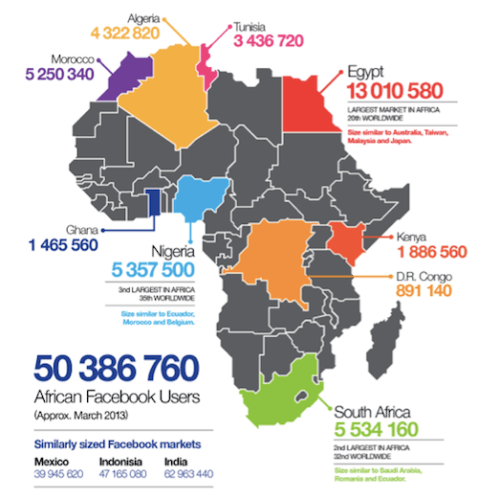
Most would agree that Facebook wasn’t so popular in Africa before the advent of Smartphone. Social media and internet usage is on the rise, statistics show that Africa is enjoying the highest subscription growth rate in the world. The estimated growth is about 60% to just less than 1 billion by 2015, from 800 million subscribers up from 500 million in 2010. These are impressive figures for the African economy.
The Internet and mobile technology are transforming the lives of many people in Africa. It’s worth to mention that Africa has surpassed Europe and the U.S. in the number of mobile phone users (Africa has more mobile subscribers than the US and EU). In Africa, mobile phones are so popular that most people own a cell phone than landlines.
Click on the link below to view more about mobile and internet usage in Africa


 The Marketing Explorer