Transparency in Business: Why It’s Important

Brand transparency is the key to success in the digital world. Being open in business has never been more important, whether it is content marketing, customer service, business model, or responding to a crisis. Transparency is a great way to gain customers’ trust, following, traffic, loyalty, sales by converting visitors into customers.
In the digital age, customers and your competitors have tons information online available to them than ever before. Brands that follow the model of being transparency win. Companies slowly understand that customers want honesty which begins with knowing your customers or audience by building a community and by engaging in an ongoing dialogue. Customers research and look into different resources before making a purchase. What it means is that people look for the truth and the marketing jargon is becoming outdated.
Companies that take the leap absolutely see the rewards. For example, Moz, a company that sells inbound marketing and marketing analytics software subscriptions. Moz is one of the most recognized marketing technology company and the company is known to be very transparent and authentic. In 2012, Moz published their funding and results in full detail for everyone to see.
Another example is Buffer, a social media management software company. Buffer published the salaries of every employee, including the CEO. This move was very bold and I am sure this move made some of their employees uncomfortable. The results of this transparency were quite amazing, the company was praised for its bravery and they were flooded with resumes and gained a tremendous traffic and engagement on their site. Besides displaying how much each employee is making, but also the formula for how they arrived at such a salary. For example, one blog post received more than 381 comments.
In 2008, Domino’s Pizza surveyed their customers and shared the results/news publicly, which included negative feedbacks. As a result, Domino’s Pizza used the negative feedback to ask their customers to help them fix the problems. By 2009, the company’s stock jumped from $7.73 to $105.11.
There are many other companies that could have changed the outcome of their crisis through being transparent. For example:
Qantas – Twitter Nosedive
Microsoft (Xbox One) – Online Service
Volkswagen- Emissions
Transparency is becoming a cornerstone of brand communication and one of the most important factors in customer engagement. Brands can no longer afford not to align what a brand says and what a brand does. Consumers are becoming more interested in what a brand stand for and seek more information about the brand.
One particular example stands out, during Xbox One launch in the midst of the confusion and anger about their online subscription. One employee tweeted ‘’sorry I don’t get the drama around having an ‘always –on’ console. That’s the world we live in. #dealwithit.’ This angered a lot of customers, and the employee was fired.
This shows that brands should dismantle silos, build a customer centric and transparent business model that must be followed by the entire organization, not by a single department.

So, what do you think about transparency? Share your views.
Beats by Dre
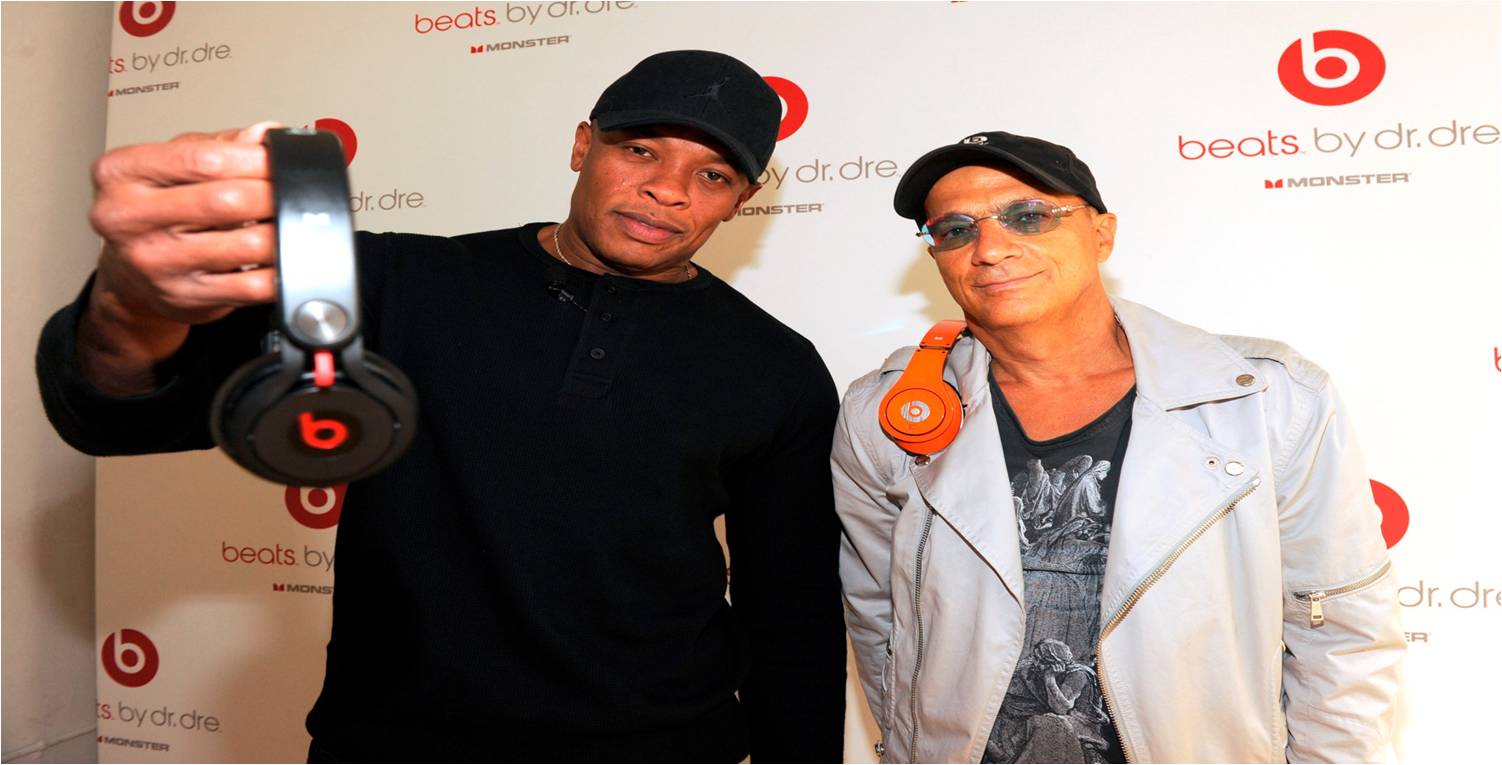
“People aren’t hearing all the music.”
Beats electronics founded in 2006 by legendary producer Andre Young, known as Dr. Dre and Jimmy Iovine. The company slogan is “People aren’t hearing all the music.”Beats family (products) includes headphones, ear buds, speakers and beats music.
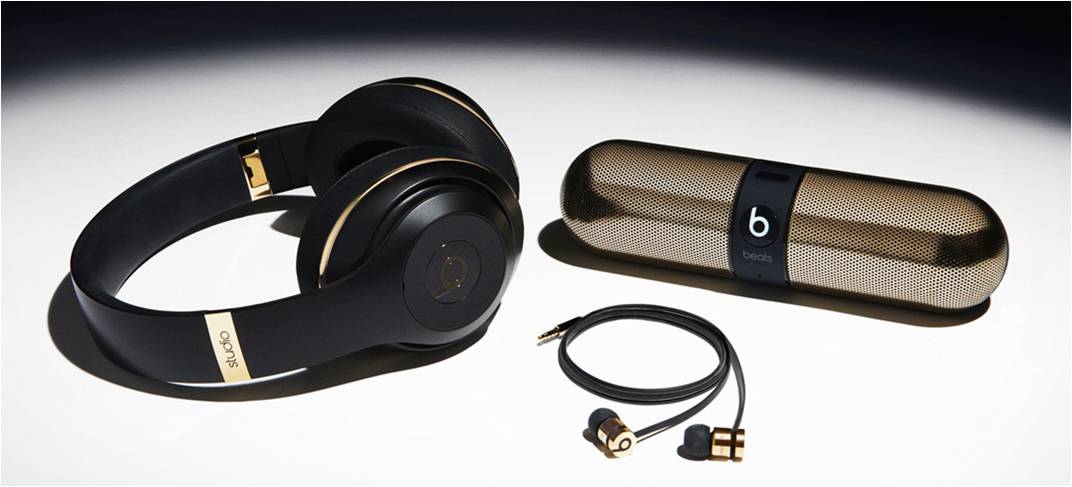

In a social context, whoever wears or owns any Beats products are seen as a fashionable, flashy music enthusiast. Beats products are considered fun, trendy, good quality and high-performance products.
In the marketing world, Beats is known for its compelling campaigns and creative marketing strategies. Beats uses its product a certain image which allows the consumers to interact with their products. Beats use an image of quality and style of their product to attract desire. By making their products “cool” and trendy, as one of the strategies that make Beats stand out.

Strategy
It is unusual to see headphones or audio equipment advertising because many companies in this industry relied on the retailer’s recommendation to their clients.
Celebrity Influencers
Beats uses celebrity influencers in their campaigns (musicians, athletes, actors), they believe young people might idolize them. Below are the examples of celebrity influencers:
- JustBeats Solo by Justin Bieber
- Heartbeats by Lady Gaga
- PowerBeats by LeBron James




Compelling Campaigns/Visual Branding

Ambush Marketing
During World Cup 2014 and summer Olympics in London 2012, Beats used ambush marketing to capture their customers. To get its message across at the Olympics, Beats sent every athlete a pair of Beats headphones. Beats was also banned by FIFA at the World Cup 2014 and players from all 32 teams. Sony was the official sponsor. This generated a lot of buzz for Beats and although Sony sent free headphones to every team, players stuck with Beats. Just because the Beats was not the official sponsor, it did not stop them from spreading its message and have a presence. Beats is a fearless brand and it turned a negative situation into an opportunity. Beats used this Ad below:
Emotion
Beats uses emotions in most of their campaigns. For instance, “Hear What you Want” campaign, it uses real stories from athletes. Emotions play a huge role in marketing, and an effective way to connect with your audience/customers. Other companies like Dove have also used this strategy. Even if your product or brand is not emotional, it is important to implement a story that will connect with your consumers.
Beats remain authentic while they take risks, think outside the box and using an emotional feel to their products to boost their brand.


Social Responsibility
Beats by Dre fights for an Aids-free generation by creating (RED) merchandising. Beats contributes $5 from each Solo2 (PRODUCT) RED Special Edition. In addition, $17 from every purchase of Beats Loves (RED) Special Edition T-shirt.
Apple acquired beats music & beats electronics for $3.2 billion. Bingo!
Gamification

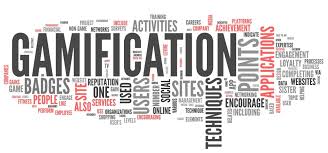
Gamification is the application of typical elements of game playing (e.g., point scoring, competition with others, rules of play) to other areas of activity, typically as an online marketing technique to encourage engagement with a product or service. Another definition is gamification is the concept of applying game-design thinking to non-game applications to make them more fun and engaging.
Gamification is playing a huge part in marketing and business in general. Although, many consider gamification as a fad, I think a properly implemented gamification system can have a successful outcome. I will discuss how a successful gamification system can extend relationships, engagement, drive employees and customer loyalty.
Gamification attributes fun, fast feedback, play, transparency, competition, collaboration, and design.
The first factor that determines a successful gamification strategy is intrinsic motivation. Intrinsic motivation is a drive that comes from within, inside an individual and not from external (extrinsic) sources.
Andrzej Marczewski’s RAMP theory illustrates that there are four key motivational drives which should be used to implement a successful gamified system.
- Relatedness: social status, connections, belonging.
- Autonomy: creativity, choice, freedom, responsibility.
- Mastery: learning, personal development, levels.
- Purpose: altruism, meaning, a reason why
Relatedness is the “glue” in making gamification successful. A lot of people have the desire to interact and be connected with others; there is a sense of belonging and being connected.
Gamification examples:

Deloitte, one of the world’s largest consulting firms in the world used Badgeville gamification and behavior management platforms to connect their consultants across the globe. The purpose was for all consultants around the world to share knowledge and expertise. With help from Yammer (social media platform) and the Geo-location system Who, What, Where and Badgeville mobile SDK, they created a mobile application that rewarded their consultants for “checking in”. According to Deloitte, they have seen an increase in knowledge sharing and better collaboration between the company and employees.
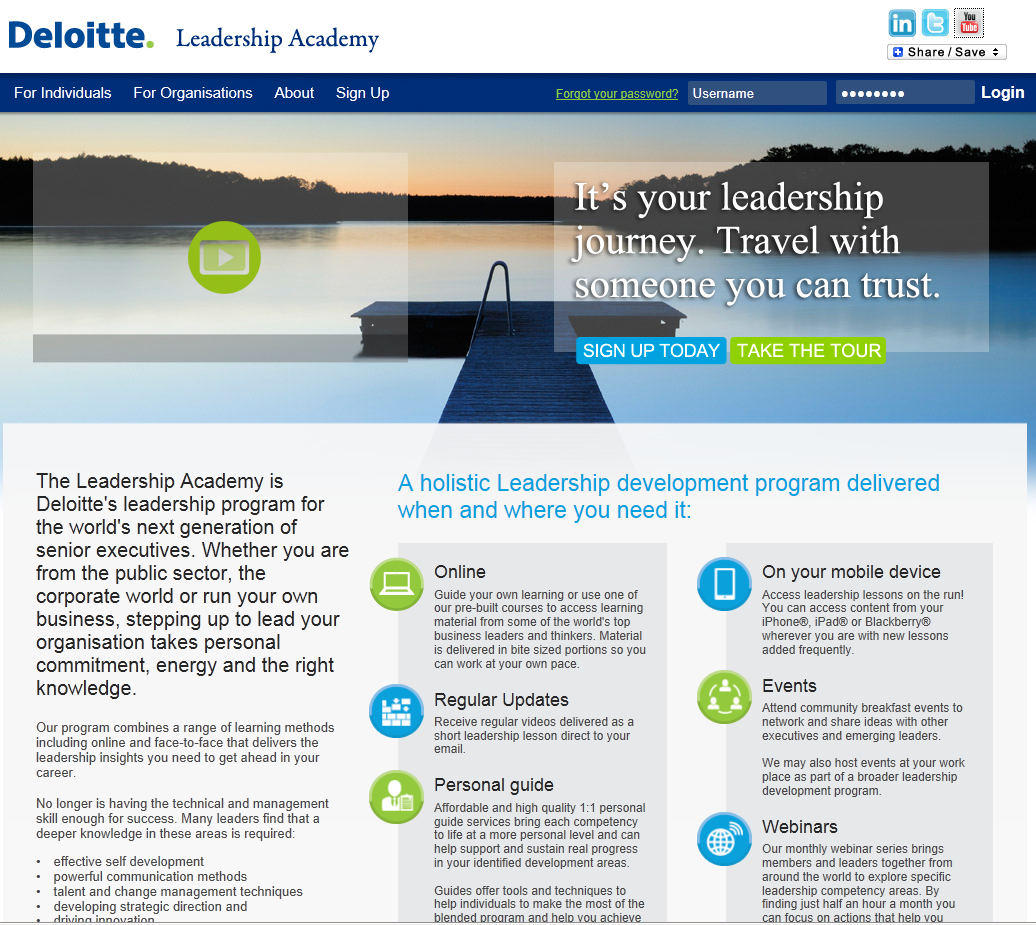
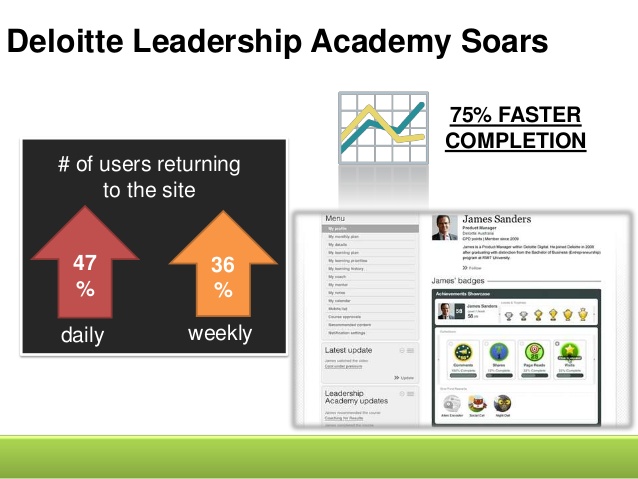
Deloitte created a leadership academy, an executive program that enables their executives to through training. To gamify, they used missions, rewards, ranks, status and more. They saw an increase in user retention, active user engagement, and adoption.
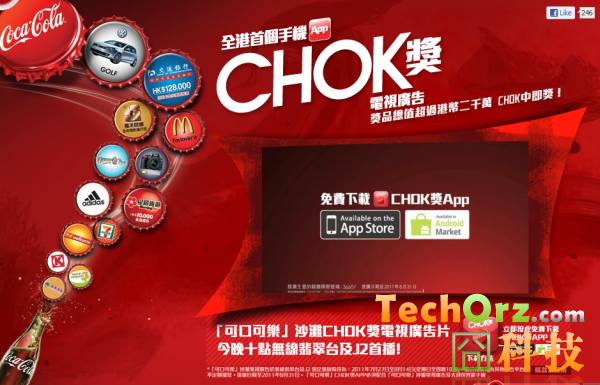
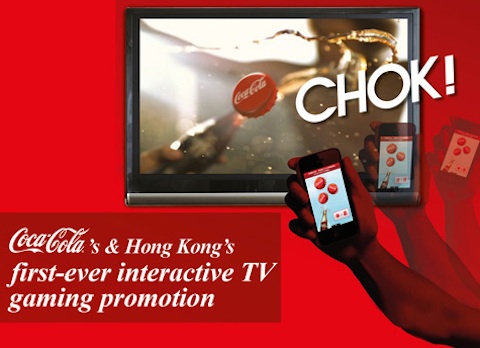
Coca-Cola is one company that has been very innovative with their marketing campaigns by using gamification. In South Korea, Coca-Cola used a vending machine challenge at a mall for visitors to dance for a chance to win a free coke. A different challenge was created in Europe, which challenged commuters to be James Bond to promote the release of Skyfall.
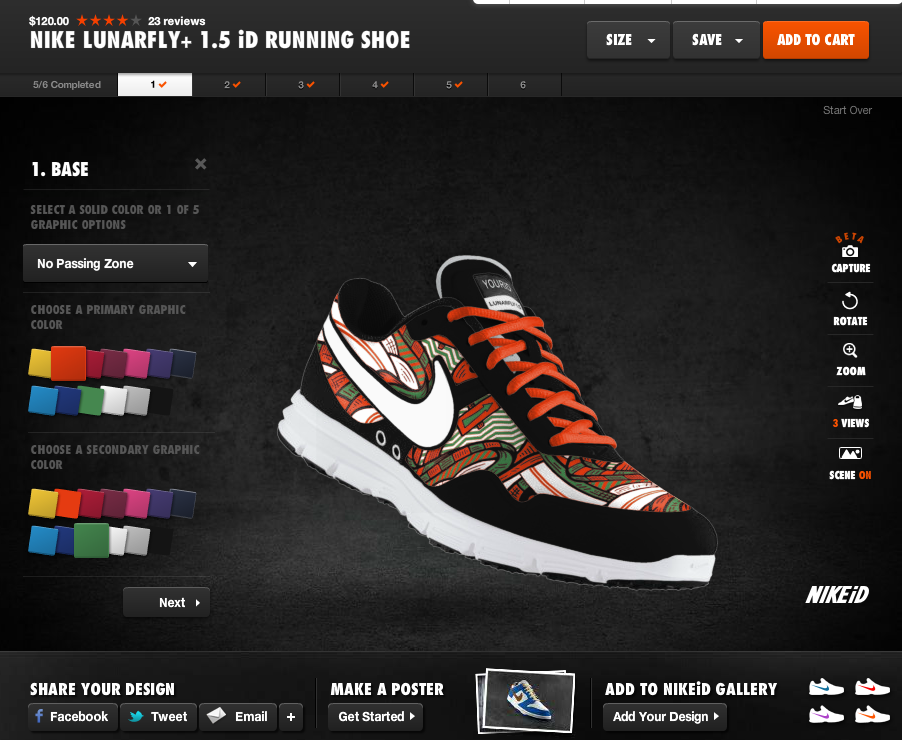
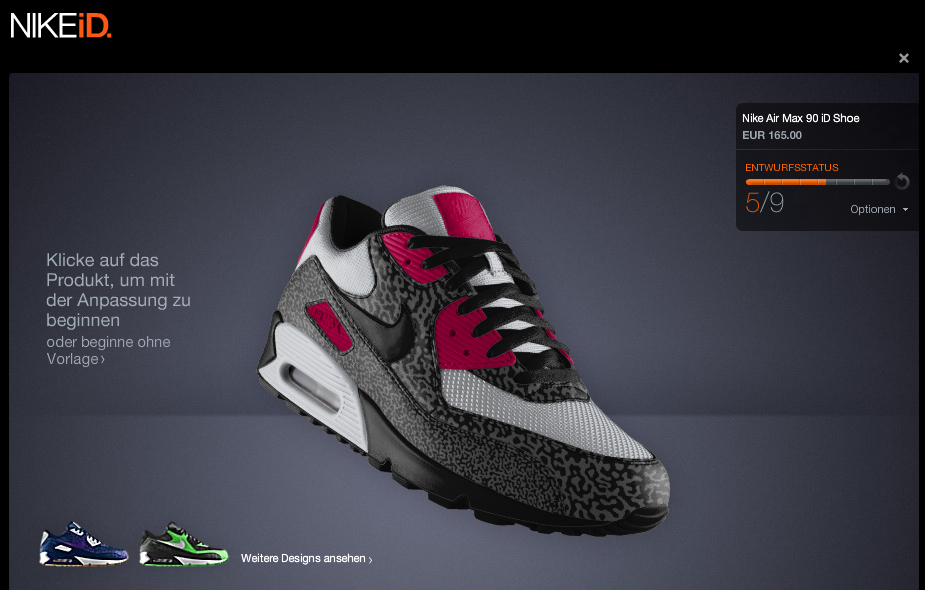
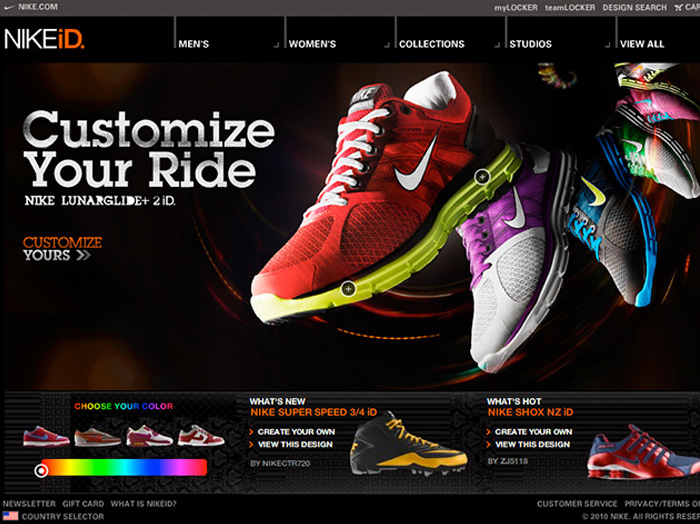
Nike is another company that is using gamification to engage with their customers. Nike started NikeiD shoes, it allows customers to customize their own shoe with their favorite colors, materials, sizing, and any other personalization a customer may wish.

Air Miles gamify travel by encouraging customers to collect miles that in return they can exchange for goods and services. To build up more points, customers buy extra flights. Through this model, it enables airlines to increase ticket sales since customers buy extra flights to build up points.
These examples showcase that a properly implemented gamification system can increase engagement, drive employees and customer loyalty.
Email Marketing
 Email marketing is still one of the most effective marketing tactic. A research by Experian states that $1 invested in email marketing initiatives still yields roughly $44.25 return for marketers. Email marketing has the ability to create leads because most consumers find comfort with email marketing. When it arrives to lead generating, it is significant for marketers to decide their lead. For instance, your goal might be for consumer to fill out a form on your website or to download an e-book or an invite to attend a webinar.

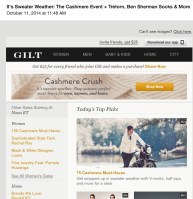 I decided to check all the emails I receive on various accounts. I actually have many promotional emails are shopping related, mostly from shops I visited or made a purchase. These e-mails are personalized for me and the call to action is either to visit the site for a deal or to view my cart. Some shopping emails have the same pattern for mobile and desktop, but mostly the invention is different on mobile. The placement of the images is arranged narrow compared to desktop. I realized many emails have auto-downloaded images and the call to action is very clear.

 Most of the marketing emails I receive on my NYU email are about digital marketing. For instance, free webinars, networking events and job recommendations.

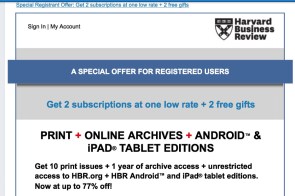 The call to action of these emails is either to subscribe, apply or RSVP for an event and subject lines are very precise. The integration of social media networks on these emails is very crucial for my action as a consumer.
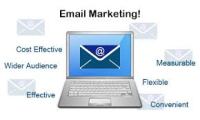
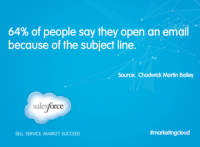 Email marketing is not the prettiest marketing tactic, but it is nevertheless one of the most efficient in acquiring leads efficiently. As a marketer, it is important to implement these steps: engaging subject line, relevant images, call to action, follow-up steps, integrate social links, and be concise. If you take these steps you will see an amazing lead engagement.
Location Based Service

A report from Juniper Research forecasts reports that location services market and mobile context will reach $43.3B in revenue by 2019, rising from an estimated $12.2B in 2014. This approximation is a clear sign that most brands understand that location marketing has a huge power of driving a higher conversion rates and most importantly the benefit of connecting with consumers while they are on a go, in the right place and time.
The only set-back is finding the balance between brand goals and consumer privacy. Location-based marketing potential is immense and it’s really important to do it the proper way by balancing goals and privacy.
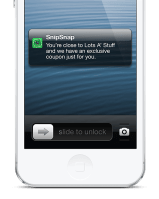
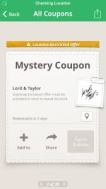 One brand that is utilizing this system is Lord & Taylor sends “mystery” coupons when they passed within 500 meters of a store.
Lord & Taylor uses and app called SnipSnap, which is one of the best-location-based market app. SnipSpan gives consumers the option to be notified about coupons based on your current location. This feature delivers the ability to report location changes in the background. This app also lets its users convert printed coupons into digital, mobile format for redeeming and obtaining reminders.
 The location-based market reminds you when you arrive at a store, you have deals saved for. This App has its own recommended offer engine, which is an amazing scheme for mobile coupons. This app uses keyword, store, category and location-based criteria to target clients.
In Guatemala, a specialty shoe retailer called Meat Pack, uses location results to detect when its customers are in rival’s store in the same area. In return, it then sends offers to the customer’s phone. This shows how the future of mobile is changing. In Bangladesh, there is a computer program evolved by researchers, the program recognizes user’s emotions. The program tracks keystrokes dynamics and analyzes patterns. The future of this wonderful technology is very bright.
 PayPal is another brand that uses location service to get a list of nearby stores who accept PayPal payments.
Sources and pictures courtesy of:
http://www.mediapost.com/publications/article/231639/lord-taylor-sees-promise-in-beacons.html
Mobile
Mobile marketing is rapidly growing and is becoming essential for any business. Mobile drives business growth and closer to consumer engagement. Consumers are changing with technology, they no longer simply go online, and they go on-line on the go.
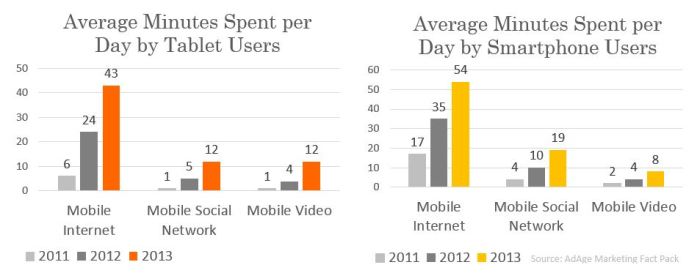 Mobile is one of the fastest growing industry. Businesses are discovering ways to utilize mobile marketing, and it is very essential for business development. Marketers have enormously started to spend their dollars on mobile. According to eMarketer, in 2010, a mere “2.1% of all digital search ad dollars were spent on mobile devices.” That amount increased 22.1% in 2013 and is expected to exceed 59% by 2017.
In the past week, I decided to track my mobile movements. At beginning, I thought this might be baffling but I soon realized that I do spend some time on my mobile mostly marketing related. On a daily basis, I go over the latest news, trends and sometimes I record my favorite shows through my phone via a mobile App. When it comes to marketing news, I normally share the latest news with my followers on Twitter. Second screen plays a huge part when it fares to certain shows, for example; I tend to tweet when I watch a show called Shark Tank. One thing I realized since I came back from my vacation is that I see a lot of travel/vacation Ads, mainly the places I visited before.
Marketing is increasing becoming proactive with targeting consumer whereabouts. One mobile solution that I believe will definitely change the mobile industry is the ability to find my current needs or emotions instead of behavior targeting, which could sometime not be accurate. For instance, I still get the hotel deals while I am not planning to travel anytime soon. But I believe soon this type of targeting will end.
In Guatemala, a specialty shoe retailer called Meat Pack, uses location data to detect when its customers are in rival’s store in the same area. In return, it then sends offers to the customer’s phone. This shows how the future of mobile is changing. In Bangladesh, there is a computer program evolved by researchers, the program recognizes user’s emotions. The program tracks keystrokes dynamics and analyzes patterns. The future of this wonderful technology is very bright.
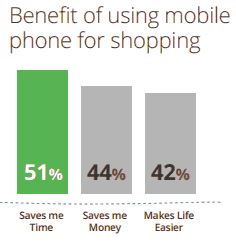
Go Mobile, it saves time, money and makes life easier!
Sources: thinkwithgoogle.com
AdAge Marketing Fact Pack
Mobile Marketing Watch
Forbes (http://www.forbes.com/sites/drewhendricks/2014/09/11/5-tips-for-perfecting-mobile-marketing/)
Marketo Blog – My Favorite Blog
The Marketo blog is one of my favorite marketing blog. This blog has so many features and categories to choose from social media to marketing automation as a digital marketer I find that very useful. The blog doesn’t have a lot of comments which is very un-usual for a blog of this magnitude, but most of their articles are shared on social media.
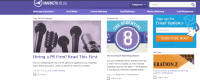
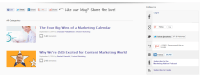
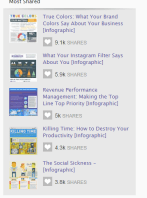
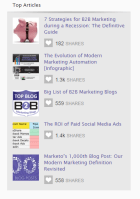
The most intriguing part of this blog is the fact that I can spend hours digging into the archives. On top of the page they have different sections like the new post, featured posts and hot posts. These features give me an option to which section I would like to visit. On the side of the blog, you can see the most shared articles, top articles and how a reader can connect with them on social media.
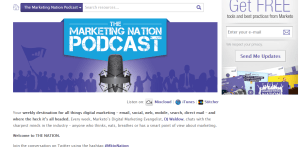
In addition, they offer podcast with different episodes plus their expertise on free tools and best practices for marketers.

This blog is very informative and as a reader, I feel a connection with the writer. This blog is a perfect example of “simplicity”.
“The art of art, the glory of expression and the sunshine of the light of letters, is simplicity” ~Walt Whitman
Digital Marketing Trends and Predictions for 2014
I would like to share with you all this info-graphic (2014 digital marketing trends and predictions). This info-graphic from Position2′s was too good not share with my followers and visitors/guests.
I believe in 2014 Marketers need to focus on Mobile, Content Marketing, Email Marketing, Marketing Automation and Social Media.
Share your thoughts about this info-graphic in the comments section?


 The Marketing Explorer
I Got Schooled: Blogging and Content Tips
Great lessons from Todd Giannattasio, President, CEO The Tresnic Media.
Once you have established your content and SEO, the next is to promote your blog content on various social media channels. This is a great way to get your blog in front of the right audience by creating awareness. When your content is shared on different social media channels it will be reached by current followers, reposted, or retweeted which will help you reach a new audience. As a blogger, you should have an email list, this is a great way to provide consistent traffic from those subscribed to your updates.
One great platform, that is very useful to cross promote is LinkedIn groups. Keep in mind the most important is owning your platform, but LinkedIn is very good when it comes to engaging with members of the group. This can create an opportunity to be recognized as “Top Influencer” in the group which builds visibility. Later on you can start your own group and invite others to join the conversation. One should also remember it is extremely important to avoid promoting, a better way to do this is posting articles that solve problems and not sales-related materials.
Final recommendation from Todd is to have a long-term goal. For instance; Todd’s goal is to become the number one content marketer on twitter. Last advice is comments that you can choose to turn comments “off”. It becomes are a matter of preference whether you allow comments or not.
Share this: