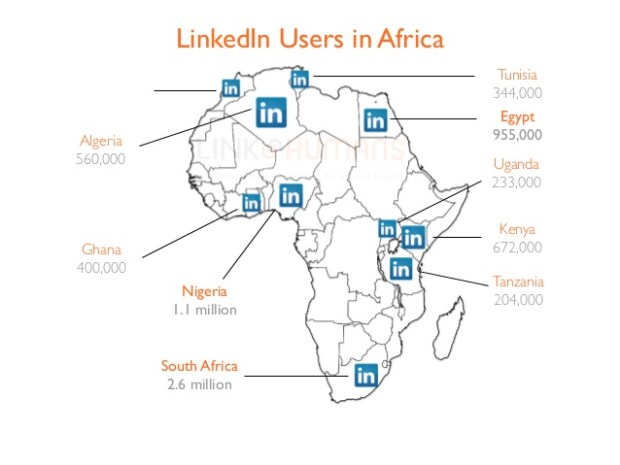
Infographic: Over 7.5 million Africans on LinkedIn; South Africa, Nigeria and Egypt account for over 60% of users
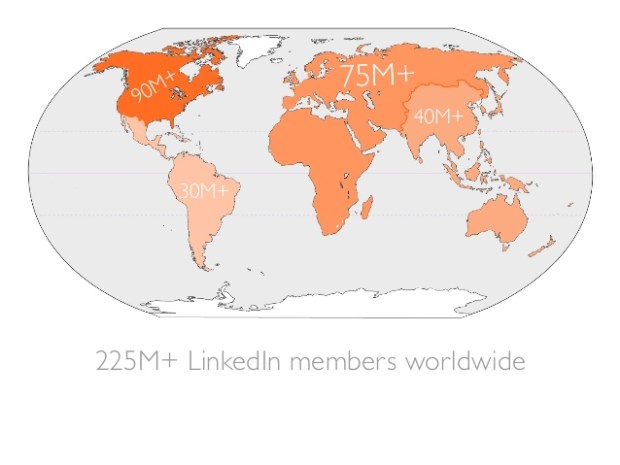
Africa is the world’s second largest and second most populous continent, after Asia. Social media in general is taking Africa by storm . Over 7.5 million Africans use LinkedIn, over 20% are entry-level, and the majority of the users are ages 18-34, most of them are male. LinkedIn is quickly gaining popularity among working class professionals in Africa though it is still far less popular compare to Facebook and Twitter. Other countries with the fastest growing number of users include Kenya, Ghana, Uganda, Tanzania, Zimbabwe, Algeria, Morocco, and Cameroon as seen in the images below.

Social Media Marketing Strategy
 Social media marketing refers to the process of gaining traffic or attention through social media sites. Social media can also be viewed as a monitoring tool, widely used to inform customer service, product development and marketing activities.
Social media marketing uses technology to build relationships, drive repeat business and attract new customers through friends sharing with friends. Social media marketing not only increases branding and website traffic, it is a powerful influence in overall search engine optimization.
Social media marketing can help you increase the activity around these top goals:
- Website traffic and user behavior (external and internal tracking)
- Conversion and sales tracking
- Page views, ad exposure
- Raising brand awareness
- Creating a positive brand association and keeping it there
- Broader customer reach
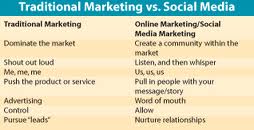 When shifting gears from traditional marketing to social media, it is important for a company to prepare a scheme. The strategy begins with a focus, which include goals. And those goals can include short and long-term goals. When you think about social media, it is important to remember to set realistic business goals. For example: Are you going to generate leads, answer complaints, engage with customers, or something else? Will you be doing all the above? How will this relate to other functions and tools, like the rest of the marketing plan or the rest of customer service? Try to stay focused and be specific.
Social Media Marketing Strategy (Influence and ROI)
Social media can be used for different goals. For example, Oprah’s opinion on literature has inspired millions to choose titles from her book club. But you don’t have to be Oprah to have influence. You influence your friend when she listens to a song you recommend on Facebook. You influence your coworker when he checks an article you posted on LinkedIn and shares it with someone else. Social actions like these are reflections of influence.
As a company you can influence one customer to another. For example, a loyal customer can act upon others by a simple tweet, feedback or an RT (retweet) that mentions the brand. It is important for organizations to focus on cultivating the engagement and not figures.
Define your target audience and find specific areas of expertise. Don’t try to cater to everyone. Alternatively, if you are really keen to progress to power users, key decision makers and influencers, your content should be designed around your market. Social media is simple and yet complicated.
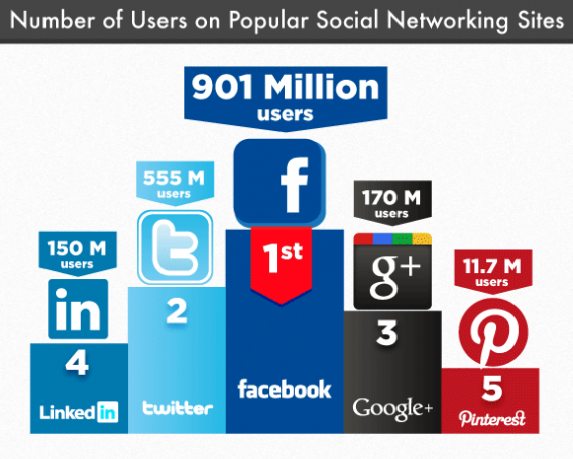
It’s complicated because you have to know your audience so well that you know exactly what social media platforms they use regularly. Is it Facebook? Twitter? YouTube? LinkedIn? The focus should be which social network is generating more audience and engagement, see the example:
 ROI = (Gain from the Investment – Cost of Investment) /Cost of the Investment
Marketing VS. ROI
Social media marketing should never be done as a stand-alone campaign, and it should always support your other marketing initiatives. Social media is not an activity that can exist on its own. For social media to be beneficial, it is important to co-exist alongside other activities such as offline marketing, digital marketing, public relations, and advertising.
Social Media Strategy (ROI and Audience)
Social Media Marketing is not necessarily a direct sales tool, but is effective at engaging your audience, conversations, expand web presence, build brand awareness, generate expose and provides SEO (Search Engine Optimization) benefits.
Some marketers say social media has no ROI but is great for:
- Brand building
- Relationship management
- Product development
- Reputation management
- Customer interaction
- Customer feedback
- Customer support
- Community building
Jeffrey Hayzlett, former Kodak CMO said: “Social media is not a campaign. It is a commitment.” Meaning a social media plan should cover your immediate and short-term while keeping an eye to the fact that technology changes all the time, if not daily. Don’t be surprised that some of the tools you chose are outdated by the time you get around accessing them. Flexibility is the key to success in business today.

One of the most frequent questions is that how do you measure ROI on social media? It is possible, but it’s not black and white. The same question could be asked about how can you measure ROI on organizational emails. The absence of social media, a striking example: an email in your organization would lead to an implicit cost of being in business. You can get greater profits using social media marketing that can help cut expenses and increase revenue.
For example: more traffic equals more profit.

Social Media Strategist (Return On Investment)
Measuring Social media ROI is like asking a sales person what is the ROI of a phone call. They only way to discover the answer is by tracking a volume of phone calls and looking at the conversion rate, understanding those converted and those who replicated the effort. It can be applied to customer service as well, what’s the ROI for great customer service? We know companies that have great customer service tend to be more profitable than those without it, but is it a truly quantifiable return on dollars spent?
 The Return On Investment in social media can be measured by looking at:
- Mentions — people are talking about your business and your product.
- Traffic — track the number of people who visit your site or blog, Fan your Facebook page, or follow you on Twitter.
- Positive feedback — look at what people are “saying” about your product. Engage with your customers through social media.
- Tracking promotional codes — How many people are clicking on a link? You can track clicks on specific urls by using url shortener: bit. ly.
- Other sites like Google Analytics, Spring Metrics, Facebook Insights, Tweetreach
Solution:
A company can measure their ROI from social media by tracking which posts and tweets are driving traffic to the site, converting these trends to sales number.
It is important to keep in mind; social media is about sharing and connecting, creating a meaningful conversation around relevant content and encourage feedback.
There is a difference between traditional marketing and social media marketing. In traditional marketing, you throw out a message to millions of people who couldn’t care less. In social media marketing, you find the people who are already talking about your message and join the conversation.
Without a well thought social media strategy, is worse than neglecting social media altogether.
Facebook and Mobile Users In Africa
Facebook is most popular social media platform in Africa. Facebook is playing an integral part of the lives of over 1.15 billion people across the globe (Social media usage). Facebook is the world’s largest social networking site; it has over 50 million users in Africa. Egypt is the takes first place with 13,010 580 Facebook users in Africa, followed by South Africa and Nigeria rounds of the top three.
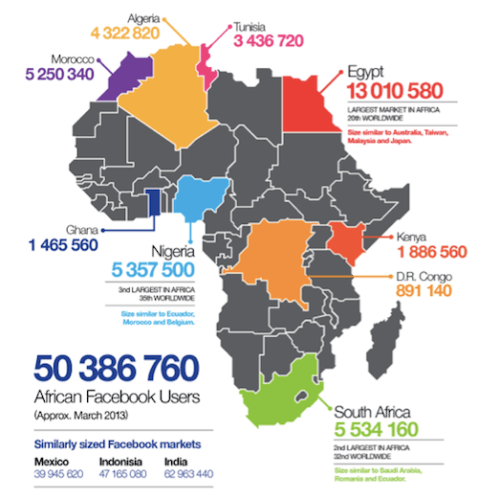
Most would agree that Facebook wasn’t so popular in Africa before the advent of Smartphone. Social media and internet usage is on the rise, statistics show that Africa is enjoying the highest subscription growth rate in the world. The estimated growth is about 60% to just less than 1 billion by 2015, from 800 million subscribers up from 500 million in 2010. These are impressive figures for the African economy.
The Internet and mobile technology are transforming the lives of many people in Africa. It’s worth to mention that Africa has surpassed Europe and the U.S. in the number of mobile phone users (Africa has more mobile subscribers than the US and EU). In Africa, mobile phones are so popular that most people own a cell phone than landlines.
Click on the link below to view more about mobile and internet usage in Africa
Meet America’s 25 Biggest Advertisers Most-Advertised Brands By 2012 U.S. Measured-Media Spending
AT&T spent $1.59 billion on advertising last year but ranked number 528 out of 645 in customer support, listed as terrible. A balance between advertising and customer service is very important; successful companies make the two works together to increase sales and customer satisfaction.
A salient example is Zappos (online retailer), puts their customers first while still participating in re-targeted advertisements. Also on the same list, Apple is spending more money to get less results compare to its competitors; the company spends $65 million more than the only other competitor on the list which is “Samsung”.
Apple is still more costly and trendier, but Samsung mass market and lower cost appeal have surpassed Apple in the smart phone shipment so far this year. Samsung is a top Asian brand ahead of Apple at the moment.
Meet America’s 25 Biggest Advertisers Most-Advertised Brands By 2012 U.S. Measured-Media Spending
Customer Service Ratings for Top Companies Based Upon User Feedback
Microsoft “The Brand”
Microsoft lacks the creativity, vision and hunger that it once had. And it most certainly sorely misses the leadership of its founder and chief visionary Bill Gates. The brand itself is still powerful and relevant, but the same cannot be applied in the mobile and the home space apart from the Xbox.
I found key problems; last week Microsoft has once again reorganized its management structure and it has tried this sort of thing many times before 2002, 2005, 2007, 2008, 2010 and 2012, it reshuffled its marketing business. Shares of Microsoft rose 2.8% to $35.69 a couple weeks ago after the reorganization news.
Many financial industry analysts and shareholders are still not in favor of the CEO. Plus these new allegations that third-party, can easily access confidential business deals, government classified memos, merger paperwork, financial transactions, intra-corporate schemes etc. This is not the right media attention for the company.
Microsoft’s vision is missing, and without vision and cause, I don’t see them making a progress, reshuffling in my opinion it won’t change the ongoing struggles. In 2010, when Windows 7 released it was the best-selling operating system in history but when Apple released the first iPad in 2010, suddenly it was all about tablets. The iPad was quickly sold out and enticed people to Apple products.
I think Microsoft is developing unreliability reputation when it comes to longevity of their products. Microsoft needs to convince their customers that when they innovate new products that they are in it for the long haul and that they won’t vanish in a few months. When products don’t catch customers immediately, they abandon them; these products require a long-term commitment.
Conclusion:
People have predicted the end of Microsoft for years now. Microsoft has built a mighty empire, it will not fall completely. They will expand into new arenas while holding on to Windows, Microsoft Office, Xbox and Internet Explorer, even if others fall short. Microsoft has also taken down most of their prices, that’s a plus.
Microsoft Logo Change
I patiently waited to see Microsoft breaking into the present era with their new logo, that’s going to come with their novel interpretations of virtually all their products and future products. They insisted the change signals the future – awareness and freshness according Jeff Hansen, Microsoft’s general manager of brand strategy.
Unfortunately,the new logo doesn’t tell me enough about Microsoft’s vision. On top of that their products were a total failure; it was definitely not the new era I envision. But the change was inevitable to revamp the brand but it just didn’t transition well with their customers and products.
The change didn’t signal the future at all, at least, the colored logo blocks still reference the traditional Windows colors. Same as Xbox One, meaning “all-in-one entertainment console”, this also looks like a downgrade from the Xbox 360. Who wants to go from 360 to 1? Anybody?
Microsoft’s New Logo:Top Brand Designers Weigh In
http://mashable.com/2012/08/23/microsoft-new-logo-commentary/
Marissa Mayer’s First Year Review
If you judge CEO’s by their company’s share price then Yahoo CEO Marissa Mayer has turned around Yahoo fortunes. When she joined Yahoo last year, the share price was around $15 and it has risen 74.4 percent to land at $27.24. To date, Mayer is responsible for 17 out of the 83 mergers and acquisitions in Yahoo’s history, or more than 20 percent.
She made headlines when the company banned employees from working from home. Mayer, who formerly worked at Google, has made a host of changes at Yahoo. Despite generating profits every quarter since she joined Yahoo, revenue has remained about static and Yahoo hasn’t convinced advertisers to spend more money to reach users. In return, advertisers don’t want what Yahoo is selling.
In my opinion, Yahoo looks fresh and hungry again, one report mentioned that morale within the company has improved. More people are applying to work at Yahoo and employees are sticking around. I give Marissa Mayer credit for trying something new. However, Yahoo still lags behind Google, Apple, Amazon, Facebook, and Microsoft when it comes to innovation.
I think it will take another year for her work behind the scenes to finally pay off. Yahoo business saw continued stability, improved stock performance, high-profile acquisitions (Tumblr), the company launched more products than ever before, revamped applications, introduced a lot of new product. She certainly has improved the company, but not the most important part of it all “Revenue”
According to YouGov BrandIndex, a poll that measures consumer perception of brands, Yahoo’s score has dropped since Mayer joined as a CEO last year. The company brand is still losing ground with consumers. But Yahoo still brings hundreds of millions of unique visitors every month.
Yahoo! has tremendous brand equity despite its failures. Marissa Mayer has brought back the winning attitude that Yahoo lacked for years. She has worked at Google for 13 years, so she is quite familiar with Yahoo’s competition. In 2012, she number 14 on the list of America’s most powerful businesswomen by Fortune magazine. If anyone can save Yahoos brand, it’s probably Marissa Mayer.
Marissa Mayer is now the youngest CEO of Fortune 500 company. This gives Yahoo an edge. Much of Mayer’s focus in her first year was resolving legacy issues, including cutting costs, and changing the company’s focus and culture. Clearly, these are not easy changes to make.
Yahoo! isn’t the only company that saw declines in their brand value, but they have taken major steps reviving their brand. Yahoo needs to focus more in the mobile space. I bet Marissa Mayer can still save Yahoo and bring it back into what it once was. It might take some time but there is definitely a bright future.
Brand Logo Change
Google font change is a great example of a well thought logo change. Going through a logo makeover is a risky decision for any brand. I wouldn’t recommend changing the logo without finding a way to transition your customers into your new appearance.
A great example is the iTunes logo, the previous logo showed a simple CD with a shining musical note ahead of it. The logo was easily recognizable and related to the product. In fact, I find the old logo was quite iconic for Apple. I am not overly fond of the current iTunes logo (blue bubble with a note inside), it looks flat and dull.
MasterCard and Animal Planet logo changes are also two striking examples of newer is not always better, the logo changes left customers confused. If your logo change is barely noticeable that customers can still see your brand in the new look, then you might not have any trouble transitioning to them.
Click the link below to see the list of the worst logo makeovers.
http://www.thedailybeast.com/galleries/2010/10/12/13-worst-logo-makeovers.html#slide2
What do you think of the new iTunes logo?
Results of a poll a couple of years ago, 69.49% preferred the previous logo.
http://www.huffingtonpost.com/2010/09/01/new-itunes-logo_n_702475.html
Dos Equis Commercials (Most Interesting Man In The World)
Dos Equis Commercial “The Most Interesting Man in the World”. The ads feature American actor Jonathan Goldsmith as “The Most Interesting Man in the World”. Dos Equis wants us to see ourselves in the man or see ourselves becoming more like the man. The ad wants us to believe that their beer will make us tough, adventurous, a suave sophisticated ladies man.
The actor Jonathan Goldsmith said in an interview that he realized how successful the campaign had been when a man came up to him in a restaurant, telling him that he had asked his young son what/who he wants to be when he grows up, and the boy replied: “I want to be The Most Interesting Man In The World. Stay thirsty my friends.”
The Ad was a success in the U.S. when imported beer sales dropped 11%, sales of Dos Equis rose more than 17%, moving the brand into eighth place among imports (in a tie with Stella Artois), when shipments rose 13%. This Ad is amazing; I always reach out to become the most interesting man. Very interesting.
Marketing
The aim of marketing is to know and understand the customer so well the product or service fits him and sells itself.
Peter Drucker
Entrepreneurs Need to Seek Out Ideas

Early on in my first company we hit a nice period of growth and hired a bunch of people. Fast forward 18 months and the business was fine but the people side of things was a mess. There was no cohesive corporate culture and we were suffering mightily because of it. At that point, I went on a reading binge and worked at assimilating as much information as possible on the people side of the business. Finally, we worked through a number of tough changes and came out stronger because of it.
I tell this story not to highlight the importance of corporate culture, but rather to emphasize that entrepreneurs need exposure to many ideas early and often. Yes, it was important for me to experience things first-hand, but I should have been more proactive earlier around gathering ideas and learning from others.
Here are a few ways to seek…
View original post 82 more words
5 Quick Steps to Go from Product / Market Fit Focused to Customer Acquisition Focused
In a simplistic form, I view the first one to two years of a startup as building a fairly basic product and constantly refining it until it uniquely meets the needs of a target group of customers. Once it’s providing real value to 10+ paying customers, then it’s time for phase two: building a customer acquisition machine. It’s hard enough making it from phase one to phase two that many entrepreneurs don’t even realize they need to shift their focus once they’ve found product/market fit to building a repeatable customer acquisition process. Working on the product, talking to existing customers, and refining what’s in place comes much more naturally to most entrepreneurs compared to obsessing over how to acquire substantially more customers every quarter.
Here are five quick steps to go from product / market fit focused to customer acquisition focused:
- Decide that at least 10+ paying customers represent a good cross…
View original post 237 more words
5 Ways to Identify Product / Market Fit
Achieving product / market fit is one of the most difficult things to do as an entrepreneur and the ultimate goal of phase one of the startup process. Most of this first phase of the process is spent building a minimum respectable product and doing whatever it takes to get the product into the hands of users — users provide the required oxygen for the product to improve. While most startups never make it past this phase due to funding, timing, lack of viable market, poor execution, etc., many do complete phase one and enter phase two where they have to build an efficient customer acquisition machine.
Here are five ways to identify that product / market fit has been achieved:
- 10+ customers have signed on in a modest period of time (e.g. 3 – 9 months) and they haven’t been friendlies (people you already knew, favors you called…
View original post 227 more words
Entrepreneurs Giving Back to Help Other Entrepreneurs
Entrepreneurs have always had a history of giving back to society and other entrepreneurs. Step into any public library in America and there’s a good chance it was initiated by the entrepreneur Andrew Carnegie (2,509 libraries). Step into the Georgia Aquarium, the largest in the world, and know that it came from a $250 million donation via Bernie Marcus, the cofounder of Home Depot. Step into an entrepreneurship program and there’s a good chance it is from or influenced by the Kauffman Foundation, a multi-billion dollar foundation dedicated to fostering entrepreneurship.
With more societal focus on social entrepreneurship, initiatives like the Giving Pledge where billionaires give away at least half their fortune, and more focus on small businesses as the net new job creators in the country, we’re going to see even more entrepreneurs giving back to help others, especially other entrepreneurs.
Here are some examples…
View original post 126 more words
No one really needs #hashtags on Facebook — but now we have them

This morning I emailed my sister a story about Google interns making $20,000 per summer with a photo of them playing in a ball pit. She responded: “#MoneyInABallPit.”
I’d be hard pressed to think of a seriously useful benefit to the hashtag. Hashtags are a cultural phenomenon that have bypassed their Twitter origins. They’re useful for conveying irony on the internet. They’re useful for conveying extreme irony in real life conversations. The hashtag was even deemed “Word of the Year” — it’s gone global. But on Wednesday, Facebook welcomed Twitter’s iconic feature with open arms, apparently not ironically:
“Hashtags are a first step in surfacing relevant and important public conversations. Over time our goal is to build out additional functionality for marketers including trending hashtags and new insights so that you can better understand how hashtags fit into your overall Facebook advertising strategies and drive your business objectives.”
Maybe back…
View original post 381 more words
How big cable uses its muscles to prevent online competition

Rumors that Apple (s AAPL) may launch a full-fledged TV set to finally take on the TV business have been around for years. So why hasn’t Apple launched such a product yet? One reason could be that cable companies don’t want it to.
Bloomberg reported Wednesday that Time Warner Cable has been using its negotiating muscles to keep TV networks from licensing content to Apple and others. An industry insider who declined to be named confirmed this account in a conversation with GigaOM, saying that the company has been aggressively pushing for these kinds of clauses in its recent contract negotiations.
At the center of the dispute are so-called virtual cable operators — companies that operate pay TV services without having any physical infrastructure of their own. Instead of using their own satellites, cables or phone networks to get TV signals to the consumers, virtual operators would simply stream…
View original post 324 more words
“The supreme quality for leadership is unquestionable integrity.”
“The supreme quality for leadership is unquestionable integrity.” ~Dwight D. Eisenhower
New TI chips speed charge times and extend battery life for smartphones, tablets

Mobile devices keep getting better yet they’re still hobbled by relatively poor battery life. Sure, we’re getting powerful chips that are more efficient on a regular basis — that’s part of the equation. Battery technology is the other part, and we’re still on a slow boat in that regard. Even worse: more devices than ever have integrated batteries that begin holding less charge over time and can’t be easily replaced.
Enter Texas Instruments(s txn), which announced new chipsets for chargers on Thursday to help in the battery department. This solution won’t let your device run longer on a single charge, so don’t get that excited. However, smart chargers that use TI’s new MaxLife technology will recharge batteries up to 30 percent faster and allow the overall lifetime of a battery to last longer. That means a full charge on a one-year old device battery won’t differ that much from…
View original post 226 more words
Amazon, Google execs clash with Apple lawyers in ebook pricing trial

On the fourth day of the federal government’s ebook pricing trial against Apple (s AAPL), Amazon (s AMZN) and Google (s GOOG) executives offered testimony in hearings that were often fraught and occasionally funny — but still introduced little evidence that was new or surprising to anyone who has been following the trial.
Kindling on the fire
First up on Thursday was VP of Kindle Content Russ Grandinetti, whose testimony continued from the previous day and who was questioned by Apple (s AAPL) attorney Howard Heiss. Heiss sought to demonstrate that Amazon needed participation from all of the Big 6 publishers in order to launch the Kindle Store in 2007,; to make it clear that Amazon was aware of publishers’ dislike of the $9.99 price point long before Apple came on the scene; and to show that Amazon had reasons of its own to switch to agency pricing, beyond the…
View original post 1,174 more words


 The Marketing Explorer